

Blog Posts
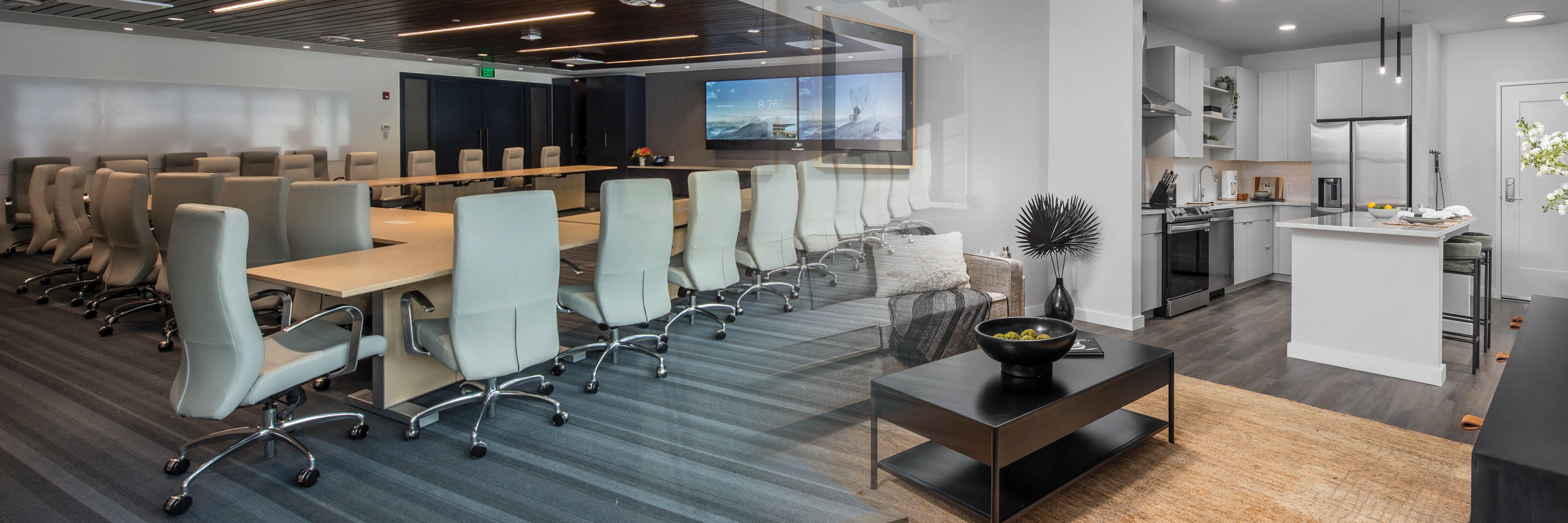
RES / Converting Vacant Office Space into Housing in Massachusetts
By Eric Greene, Vice President, Residential Group Manager
Across Massachusetts, and particularly in Greater Boston, the demand for housing continues to outpace supply. At the same time, the commercial real estate market is experiencing a historic shift. Office vacancies across the Commonwealth reached record highs in 2024–2025, driven largely by hybrid and remote work trends. According to the Massachusetts Housing Partnership (MHP) and the Citizens' Housing and Planning Association (CHAPA), Massachusetts faces an estimated 200,000-unit housing shortfall over the next decade. Meanwhile, the City of Boston reported office vacancy rates surpassing 20%, levels not seen in nearly 30 years.
This imbalance, empty office buildings in our urban cores, and an urgent need for more housing have created a new wave of opportunity: office-to-residential conversions. Nationally, this trend is gaining momentum, but Massachusetts is uniquely positioned to lead. In 2023, Governor Healey announced a series of statewide housing initiatives aimed at accelerating housing production across the Commonwealth, including funding programs that support office-to-residential conversion projects. Boston followed with its own downtown office-to-residential conversion program, offering zoning flexibility and financial incentives to encourage the adaptive reuse of underutilized commercial buildings.
At Erland, we're seeing the same shift among our private-sector partners: owners and developers increasingly view repositioning underutilized office assets as both an economic lifeline and a way to contribute to the region’s long-term housing needs.
Why Office-to-Residential Conversion Makes Sense in New England
Massachusetts’ constrained land availability, especially in gateway cities and dense metro areas, makes ground-up construction increasingly challenging. Adaptive reuse of existing structures provides:
- Speed-to-market compared to full demolitions and rebuilds
- Sustainable, lower-carbon development, preserving embodied carbon
- Retention of neighborhood character through historic building reuse
- A pathway to alleviate housing shortages without expanding footprints
But repurposing older commercial properties, particularly post-war and mid-century office buildings, presents its own set of technical, logistical, and regulatory challenges.
Key Challenges We’re Seeing with Conversions Today
Building Structure & Floor Plates
- Many office buildings, especially those built between the 1950s and 1980s, feature large, deep floor plates designed for cubicle layouts. Residential units, however, require access to natural light and ventilation. Deeper footprints can lead to:
- Long, narrow units that compromise livability
- Inefficient layouts due to window limitations
- Underutilized interior square footage
- Massachusetts agencies, including the Massachusetts Office of Housing & Livable Communities (OHLC), highlight this issue as one of the biggest design barriers to conversion.
Systems Upgrades & Code Compliance
- Commercial buildings were never designed for residential mechanical, electrical, and plumbing demands. Common challenges include:
- Plumbing cores that don’t align with apartment stacks
- HVAC systems designed for large open spaces rather than compartmentalized units
- Fire and life safety systems requiring significant reconfiguration to meet residential code requirements under 780 CMR and the IBC as adopted in Massachusetts
- Acoustic concerns, particularly for conversions in active urban areas
- These upgrades often require major re-engineering and early collaboration with trade partners.
Cost & Financial Feasibility
- Residential rents, even in desirable markets, don’t always match the revenue of Class A office space. Conversions often rely on:
- Public subsidies
- Tax-increment financing (TIF)
- Historic tax credits (especially relevant in Massachusetts’ legacy mill buildings)
- Local incentives
- Without these mechanisms, affordability requirements can significantly challenge pro formas.
Zoning & Permitting
- Office districts are rarely zoned for residential use. Developers frequently face:
- Rezoning petitions
- Board of Appeals variances
- Negotiations around inclusionary development requirements
- In 2024, Massachusetts adopted new MBTA Communities Act guidelines, which encourage higher residential density near transit, but many office districts still require individual approvals to convert.
At Erland, our experience with occupied renovations, historic adaptive reuse, and complex structural reconfigurations positions us to guide owners and developers through the technical and logistical hurdles of these transformations. Our approach focuses on:
- Early Feasibility & Due Diligence – We analyze building systems, structural capacity, and phasing strategies. Our preconstruction team identifies potential barriers before they affect cost or schedule.
- Collaborative MEP & Structural Solutions – We work with engineers to creatively re-route systems, add additional shafts or cores, and support vertical penetrations needed for residential plumbing and ventilation.
- Cost Modeling & Incentive Alignment – To improve project feasibility, Erland partners with owners to leverage:
- Massachusetts Housing Transformation Incentive funds
- Historic and federal tax credits
- Local conversion programs
- Energy rebates (Mass Save, utility incentives)
- Phased Construction in Occupied or Urban Settings – Many conversions occur within dense neighborhoods or partially occupied buildings. Erland’s proven strategies, temporary egress solutions, noise and vibration control, and detailed logistics planning ensure a safe and predictable process.
Office-to-residential conversion isn’t a simple swap. It’s a highly technical, high-reward transformation that requires the right team, the right strategy, and a deep understanding of building behavior. As cities continue to redefine their commercial cores, these projects will play a pivotal role in meeting Massachusetts’ housing needs and breathing new life into underutilized buildings.
Erland is proud to help clients navigate this shift, strengthening communities and delivering projects that shape the future of residential living across New England.
For any questions regarding this topic, please contact Eric Greene at egreene@erland.com.
Resources:
1. Massachusetts Housing Transformation Initiative
Governor Maura Healey’s $150M office-to-residential conversion fund.
Source: Massachusetts Governor’s Office – Housing Initiatives
https://www.mass.gov/news/press-releases (search: “Housing Transformation Initiative”)
2. Massachusetts Office of Housing & Livable Communities (OHLC)
Guidance on adaptive reuse, housing production, codes, and incentives.
https://www.mass.gov/orgs/office-of-housing-and-livable-communities
3. CHAPA (Citizens’ Housing and Planning Association)
Statewide housing shortage data, affordability reports, and zoning research.
https://www.chapa.org/research-report s
4. MBTA Communities Act Resources
Zoning requirements for multi-family density near transit; relevant when rezoning office districts.
https://www.mass.gov/mbta-communities
5. Massachusetts Smart Growth Alliance
Reports on housing production, zoning reform, and adaptive reuse advocacy.
https://www.ma-smartgrowth.org/resources
6. Downtown Office to Residential Conversion Program (City of Boston)
City incentive program for office-to-residential conversions.
https://www.boston.gov/economic-opportunity-and-inclusion/downtown-office-residential-conversion
7. Boston Planning & Development Agency (BPDA)
Zoning, permitting guidance, and economic data including vacancy rates.
https://www.bostonplans.org/
8. Boston’s Inclusionary Development Policy (IDP)
Requirements impacting residential conversions.
https://www.boston.gov/housing/inclusionary-development-policy
9. Massachusetts Housing Partnership (MHP)
Reports on the Commonwealth’s housing supply crisis.
https://www.mhp.net/news/research
10. MAPC (Metropolitan Area Planning Council)
Research on housing need, zoning, land constraints, and land use patterns.
https://www.mapc.org/learn/housing/
11. ULI (Urban Land Institute) – Office-to-Residential Conversion Studies
National and regional analysis on feasibility and design challenges.
https://uli.org/research
12. NAIOP Massachusetts
Legislative updates, market analyses, and insights on redevelopment trends.
https://www.naiopma.org/
13. The Massachusetts Tax Credit Program (Historic Rehabilitation Tax Credit – MHRTC)
Relevant for adaptive reuse of older buildings.
https://www.sec.state.ma.us/mhc/mhcmhcic/mhcichtc.htm
14. CBRE: Office Market Reports – Boston & Suburban Massachusetts
Quarterly vacancy rates, absorption trends, and office market forecasts.
https://www.cbre.com/research-and-reports
15. JLL Research – Boston Office & Multifamily Reports
Market insights that support conversion feasibility.
https://www.us.jll.com/en/trends-and-insights/research
16. Colliers International Research – Boston
Data on floor plate sizes, vacancy rates, and retrofit challenges.
https://www.colliers.com/en/research
17. Mass Save® Incentives
Energy efficiency rebates applicable to multifamily conversions.
https://www.masssave.com
18. Architecture 2030 – Embodied Carbon in Building Reuse
Useful for sustainability arguments in conversion vs. demolition.
https://architecture2030.org/
19. Built Environment Plus (BE+)
Massachusetts-focused sustainability and carbon reduction resources.
https://builtenvironmentplus.org/resources/
20. International Building Code (IBC) & Massachusetts State Building Code (780 CMR)
Residential conversion code requirements (fire protection, egress, MEPs).
https://www.mass.gov/massachusetts-state-building-code-780-cmr
21. National Multifamily Housing Council (NMHC) – Office Conversion Reports
Guidance on structural, financial, and design challenges.
https://www.nmhc.org/research-insight/
22. Gensler Research Institute – Office-to-Residential Design Guidance
Widely cited studies on floor plates, light/well strategies, and feasibility.
https://www.gensler.com/research
23. Boston Globe – Housing and Office Conversion Coverage
Ongoing stories about office vacancy and adaptive reuse in MA.
https://www.bostonglobe.com
24. WBUR – “The Shift from Office to Housing in Boston”
Public radio stories explaining policy impacts.
https://www.wbur.org/
25. Banker & Tradesman
Local commercial real estate reporting on Massachusetts conversions.
https://bankerandtradesman.com/